

Earlier this year, I started a new hobby. It’s one that I’ve always found fascinating, but I never really thought I’d have the chance to pursue. By sheer chance, though, an opportunity arose for me to learn the ropes from a group of experienced beekeepers, and I jumped at it.
At the tail end of winter, I was going about my duties at work when I met a couple of ladies who were moving beehives from the site. We got chatting, and I mentioned that beekeeping was something I’d always found interesting and would love the opportunity to do. To my surprise, they told me they were running a beginner’s course that was due to start in the next couple of weeks.
I attended this course, which consisted of six evening sessions. It was fantastic, informative, and had the odd bonus of offering a fantastic selection of tea, coffee and biscuits.
Towards the end of the course, we attended my local bee club’s apiary, which is home to several beehives and dozens of members. The group works together to keep the hives healthy, and they’re used as a teaching resource for beekeepers of all experience levels, whether seasoned experts or complete beginners like myself.
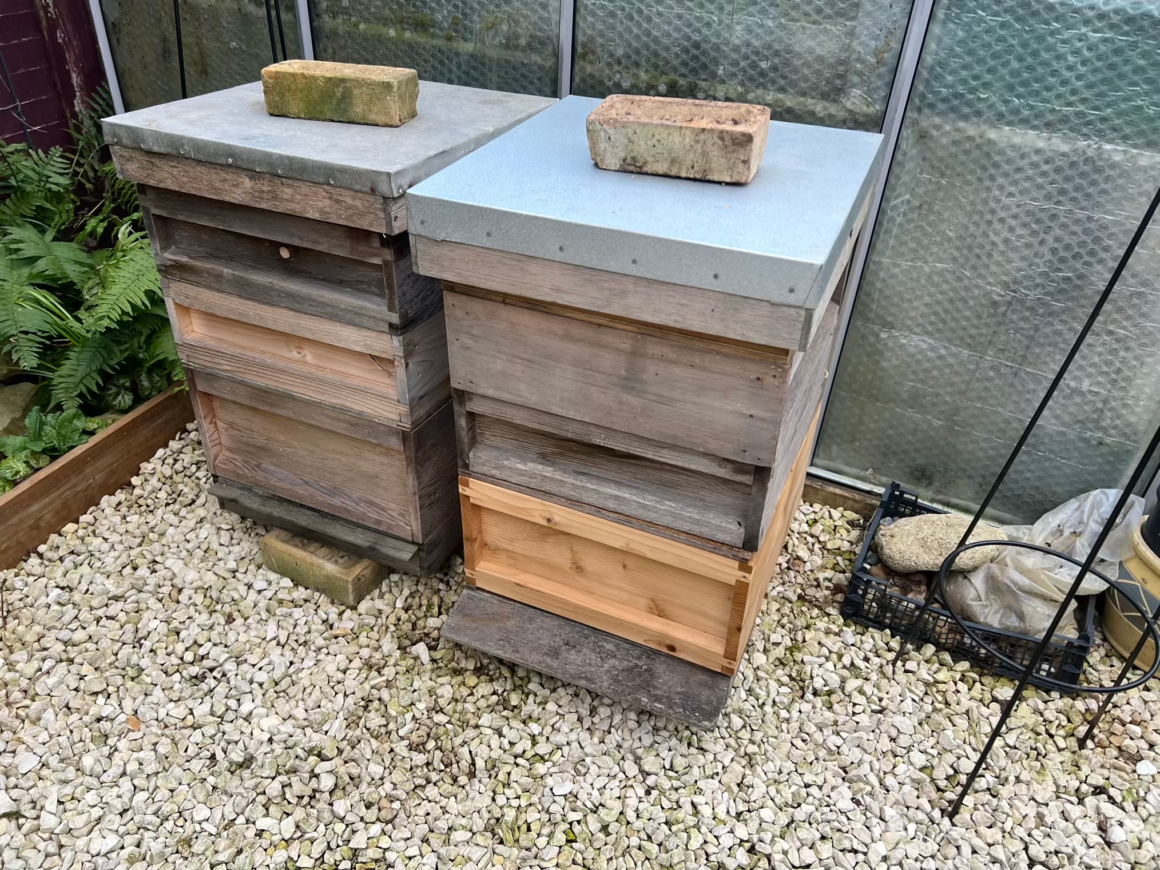
The day after my second practical session at the group apiary, I arranged to purchase a nucleus colony of bees to start my own beekeeping journey. A couple of weeks before that, I had met a beekeeper who was giving up the hobby and sold me two complete hives, with space for the bees to breed and space to harvest honey. I thought I’d begin with two hives, having learned that beekeeping is often easier with multiple colonies, as one hive can support the other if the need arises.
So, with my hives and bee colony secured, I just needed to find a suitable site to place them. Unfortunately, my garden is far too small, and I like my neighbours far too much.
I simply shared a post on my town’s Facebook group asking whether anyone would be willing to provide a suitable home for these fascinating pollinating insects. I was surprised to find that more than fifteen people invited me to visit their gardens, farmland, alpaca farms and campsites in search of the perfect location.

I set out visiting these places, met some great people, and discovered sites close to home that I didn’t even know existed. My favourite spot by far, however, was in the garden of a local lady who was very like-minded and a gardener herself. Her garden contained an old orchard that would be the perfect place to house the bees. It was sheltered from cold winds, enjoyed south-facing sunshine throughout the year, and she too would benefit from having the bees on site, as they would pollinate the apple trees and hopefully help provide a bumper crop.
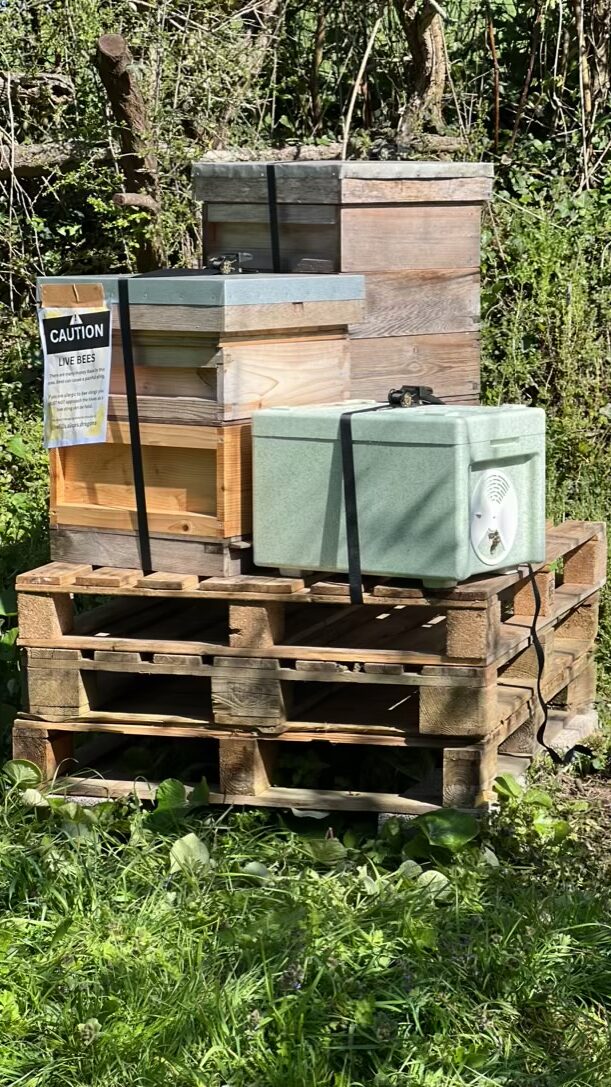
The first step in setting up my bees was getting them settled into their new location. They needed a few hours to orientate themselves. There’s a saying in beekeeping that you can move a hive either three feet or over three miles. As these bees had travelled well over three miles, they would reorientate to their new location rather than attempt to return to their original site. The distance was great enough that they now had to establish themselves in this new territory.
It was fascinating to watch this process. The bees emerged from their travel box and flew out of the hive backwards in a figure-of-eight pattern, gradually travelling further and further from the hive as they mapped out and memorised its location.
With that complete, after a few hours, I moved them into their new home.

I was using a British National hive, a very popular format in the UK and one favoured by many people on my beekeeping course. I couldn’t believe the condition of the second-hand hives I had purchased. After disinfecting them with a blowtorch to help prevent the spread of disease, they made the perfect home for my new bees.
When beekeeping, it’s generally advised that you inspect your colonies once every seven days.
This ties in with the life cycle of honeybees and is the perfect interval for managing swarming, checking food stores and monitoring honey production.

After one week, the bees had multiplied and were quickly filling out their brood box. After two weeks, I added a second brood box to try and grow the colony as large as possible in preparation for the summer honey flow.
My priority during spring was to create a strong colony with plenty of workers ready to head out and forage once summer arrived.
Weeks three and four were fantastic, but week four brought a charged queen cell. This is a sign that the colony has run out of space and is preparing to swarm.
It was now time for me to rapidly increase my skill level and learn a process called the Demaree split.
The Demaree split involves isolating the queen in the bottom brood box and separating her from the majority of the brood, which is placed in an upper brood box. This causes the upper brood box to believe it is queenless, while the bees continue tending and nurturing the brood. Meanwhile, the queen remains in the lower box with plenty of room to lay eggs, effectively allowing the colony to continue expanding without swarming.
Although stressful as a beginner beekeeper, the process was very effective. While I was carrying it out, I was covered in bemused and slightly annoyed bees, but I have to admit that I got quite a buzz from it. Pardon the pun.
It’s now early summer, and I’ve added a second colony of bees to my apiary from the same supplier, as I was so pleased with the first colony he provided.
The strain I’m keeping is Buckfast, a type of honeybee known for prolific honey production, rapid colony growth and a calm temperament. As I’m keeping my bees on somebody else’s land, I didn’t want bees that were easily aggravated or had a tendency to sting.

I’m really excited for summer, and I hope that my original colony, which is now a sight to behold, can provide me with some summer honey.
My goal for the smaller second colony is to grow it in the same way I did with the first. Rather than focusing on honey production, however, I want to create a small split from it and place that into the nucleus box it originally arrived in, giving me a third colony to act as a backup through the winter months.
In recent years, getting bees through winter has proved quite difficult, and with colony losses remaining high, having a third colony provides a useful insurance policy.
Right now, when I look into both hives, I can see glistening nectar, plenty of young bees, and healthy, productive queens laying strongly. I live close enough to my apiary that when I sit in my garden and watch honeybees visiting the flowers, there’s a good chance that some of them are from my own hives, which is a very exciting thought.
I’ll keep you all updated.