
When we think about creating a beautiful garden, it’s easy to focus on colour, foliage and flowers. But for years I completely overlooked one of the most powerful elements of all: scent.
My wife, on the other hand, always made fragrance a priority. She’d choose highly scented roses and other flowering plants, while I was usually distracted by dramatic foliage and architectural shapes. Looking back, she definitely had the right idea.
Because I’m at work during the day, I often miss the strongest fragrance as flowers warm up in the sunshine. Instead, I’ve come to appreciate a completely different time of day. On warm summer evenings, when it’s finally time to sit outside, unwind after work and enjoy the garden, a handful of plants begin releasing the most incredible perfume.
Over the past few years I’ve found three favourites that transform the garden after sunset. Some are well known, while others completely surprised me, but they’re all easy to grow and well worth adding to your garden, whether you have a large tropical border or just a small patio.
1. Nicotiana (Flowering Tobacco)
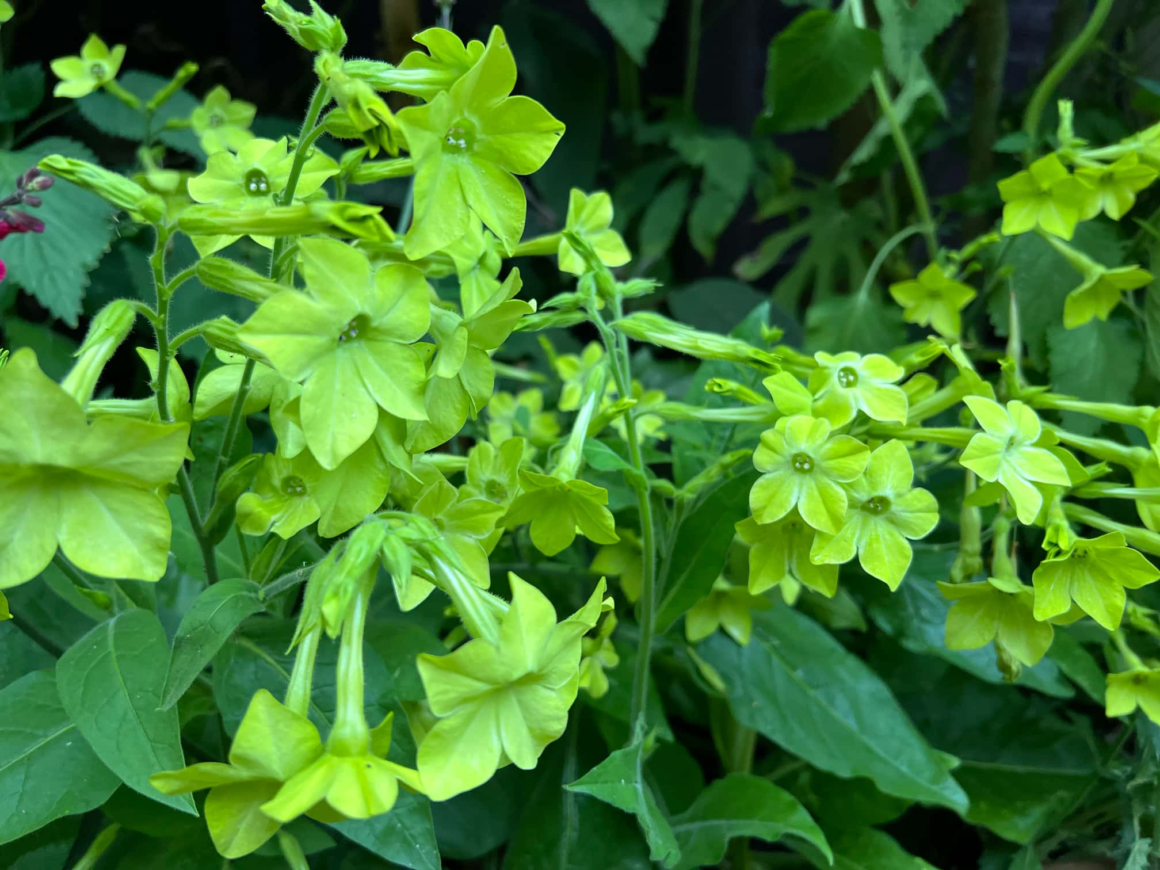
If you’re looking for one of the best evening-scented plants, Nicotiana has to be near the top of the list.
Often called flowering tobacco, these plants release a wonderfully rich, sweet fragrance during the evening and throughout the night. The scent is designed to attract moths, which are important nighttime pollinators.
The species Nicotiana sylvestris is probably the best known, producing elegant white tubular flowers on tall stems. There’s a good reason so many night-scented plants have white flowers—they stand out far more clearly in low light, making them easier for moths to find.
If you prefer something with a little more colour, one of my favourites is Nicotiana ‘Cuba Bright Red’. Growing to around 20cm tall, it produces vibrant red flowers that look fantastic amongst bold tropical foliage while still releasing that wonderfully sweet evening fragrance.
For foliage lovers, there’s another brilliant option: Nicotiana ‘Lime Green’. The unusual green flowers blend beautifully into lush jungle-style planting, adding fragrance without competing for attention. It’s a subtle but incredibly effective plant that also provides an excellent food source for pollinating insects.
2. Giant Busy Lizzie (Impatiens tinctoria)
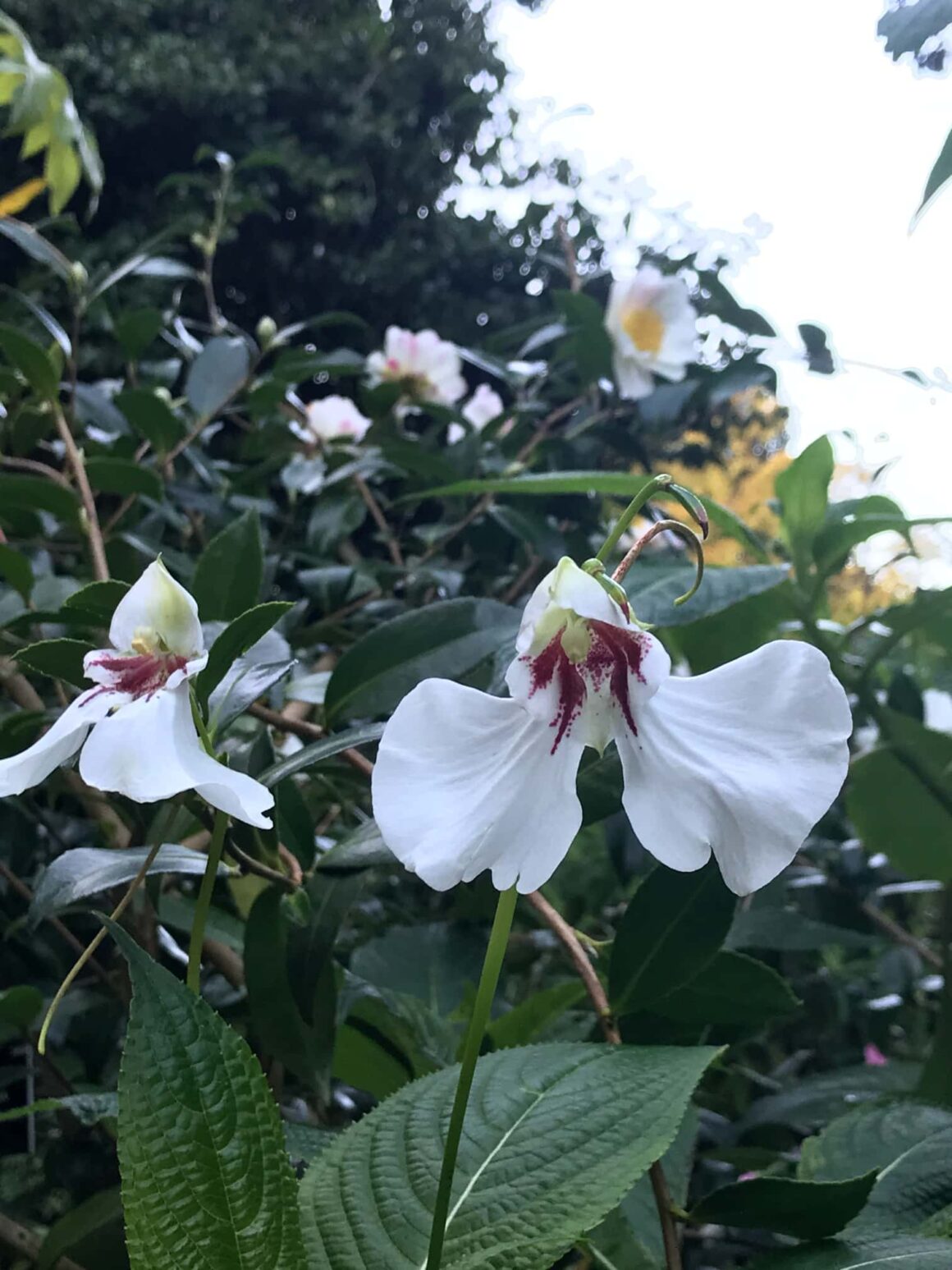
The second plant on my list is one that completely caught me by surprise.
Impatiens tinctoria, sometimes known as the giant busy lizzie, originates from South Africa and grows into a spectacular herbaceous perennial reaching around 5 feet (1.5 metres) tall.
Its flowers are unlike those of the bedding busy lizzies most people are familiar with. They’re large, white blooms with beautifully speckled red throats and a long, elegant spur that gives them an almost tropical orchid-like appearance.
I spent years working alongside these plants at Abbotsbury Subtropical Gardens and had absolutely no idea how fragrant they were. By the time evening arrived, I’d already gone home.
It wasn’t until I planted one in my own garden and happened to be watering on a warm summer’s evening that I realised what I’d been missing. The scent was incredible and quickly filled our entire garden.
Although the foliage disappears completely over winter, the underground tubers survive and return each spring, quickly growing back to well over five feet before flowering from June onwards.
It performs well in full sun but, from experience, extreme heat can scorch the foliage during particularly hot weather. If your garden gets very warm in summer, partial shade often produces healthier plants while still giving you masses of flowers.
3. Brugmansia ‘Charles Grimaldi’ (Angel’s Trumpet)
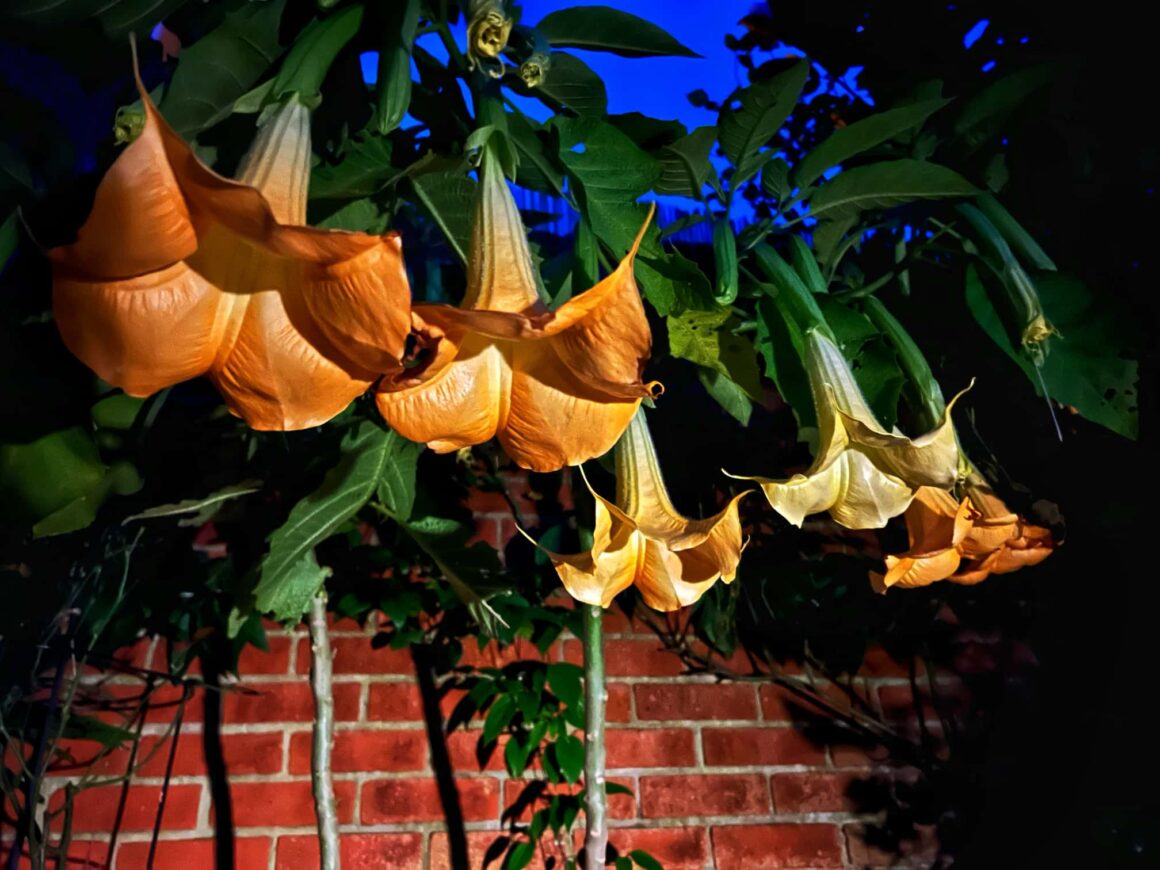
If I had to choose the single best scented plant I’ve ever grown, this would probably be it.
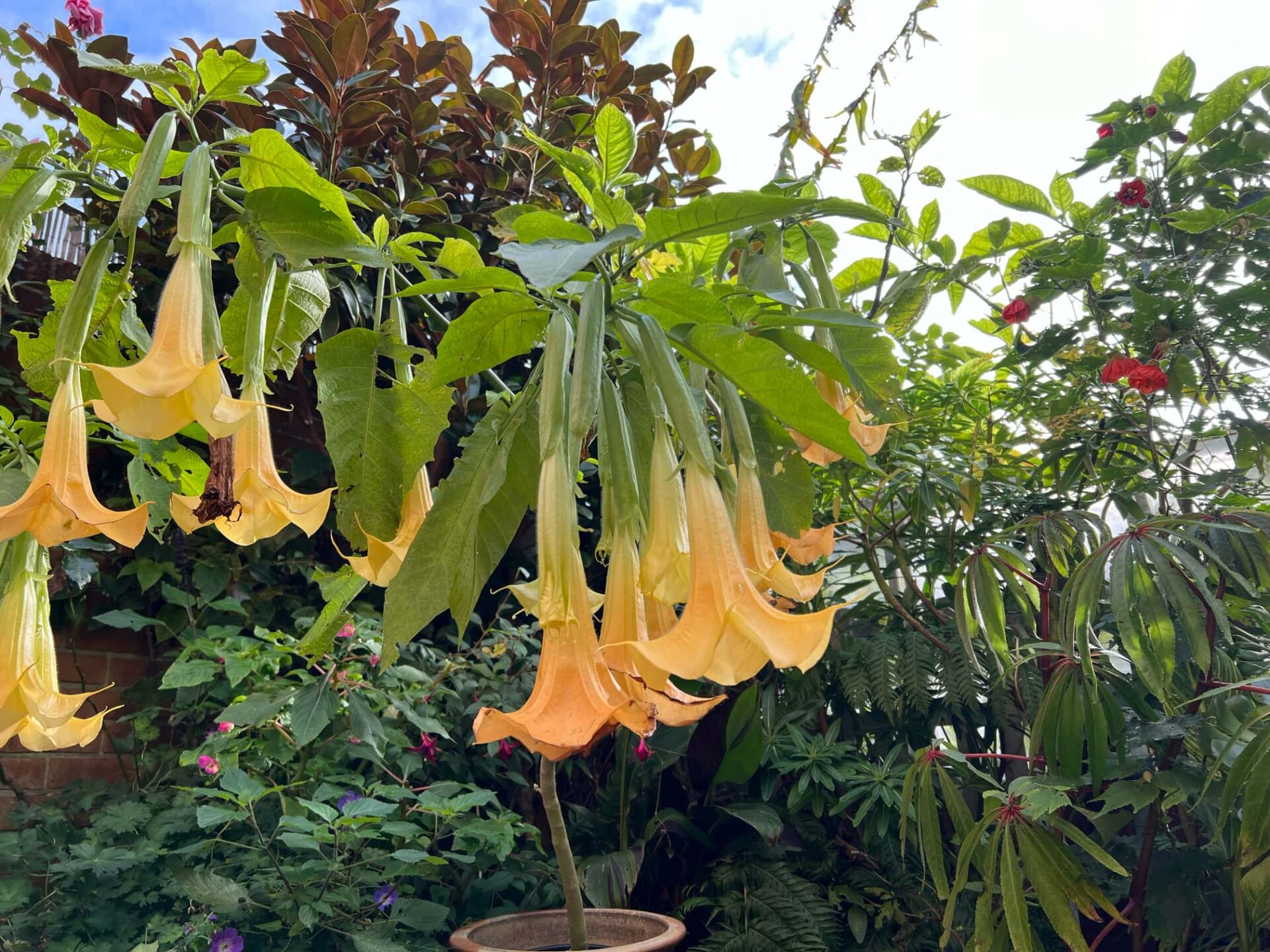
Angel’s trumpets, or Brugmansia, are famous for their enormous hanging flowers, but one cultivar has consistently stood out in my garden: Brugmansia × cubensis ‘Charles Grimaldi’.
It’s been one of the easiest Brugmansias I’ve grown, flowers prolifically and overwinters reliably in my greenhouse, which I simply keep above 5°C during winter.
In warmer climates it can eventually become a small tree, but here in the UK it’s usually grown in a large container, where it typically reaches between 7 and 10 feet tall.
From June right through until autumn, it produces huge trumpet-shaped flowers in beautiful shades of warm yellow and orange that fit perfectly into Mediterranean and tropical planting schemes.
The fragrance is simply extraordinary.
You don’t need to stand next to the plant to enjoy it. On a warm evening, it will happily perfume an entire patio, courtyard or balcony.
If you decide to grow one, just be aware that Brugmansias are incredibly hungry plants, especially in containers. Give them the largest pot you have room for and feed them weekly throughout the growing season with a liquid tomato fertiliser. They’ll reward you with stronger growth and far more flowers.
Bring Your Garden to Life After Sunset
Adding fragrance has completely changed the way I experience my garden.
Instead of simply admiring it during the day, I now look forward to stepping outside on warm summer evenings and enjoying a completely different sensory experience.
Whether you choose the sweet perfume of Nicotiana, the unexpected fragrance of Impatiens tinctoria, or the unforgettable scent of Brugmansia ‘Charles Grimaldi’, these plants prove that a garden doesn’t have to stop being beautiful once the sun begins to set.
Sometimes, that’s when it really comes alive.